


M5433
£72,000
Description
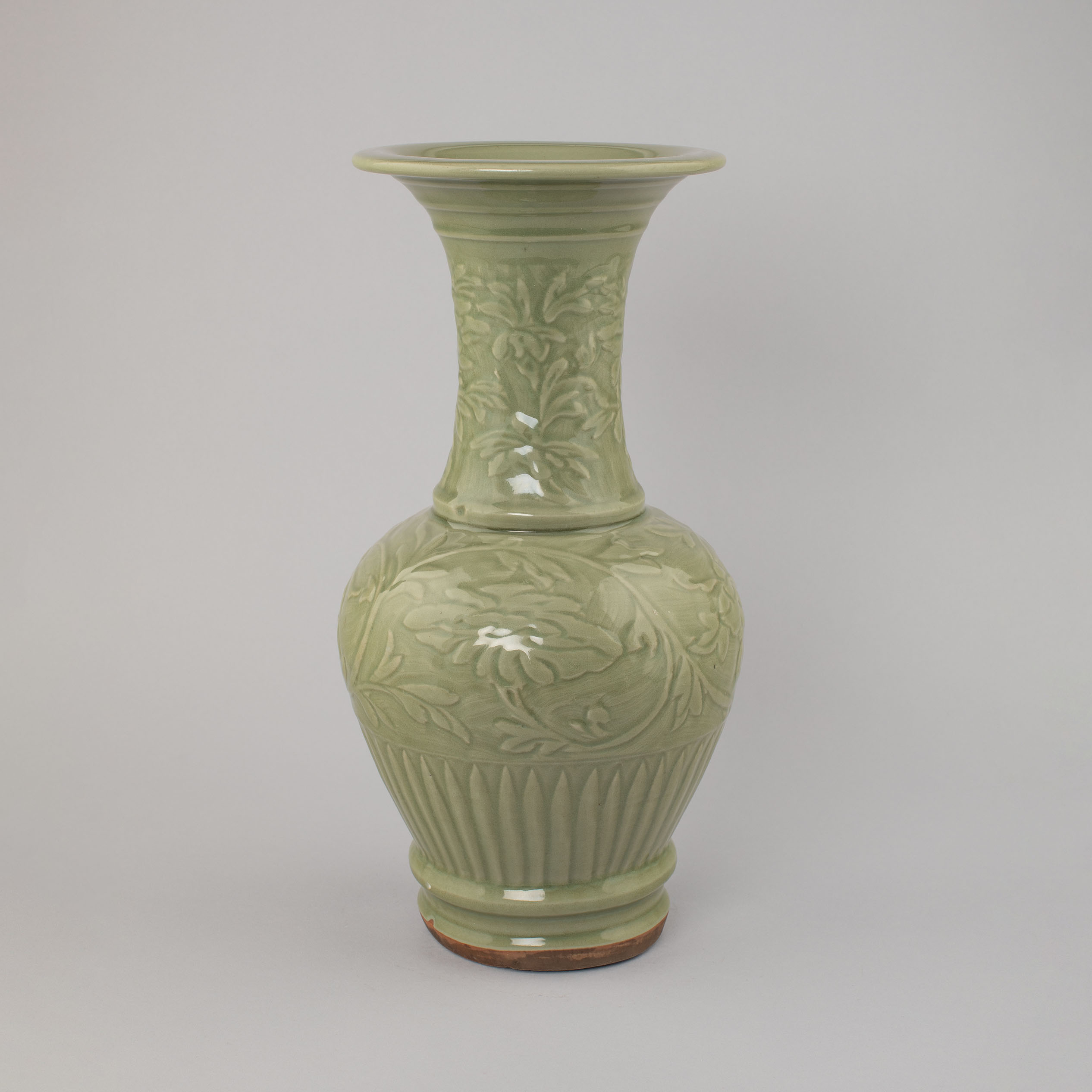
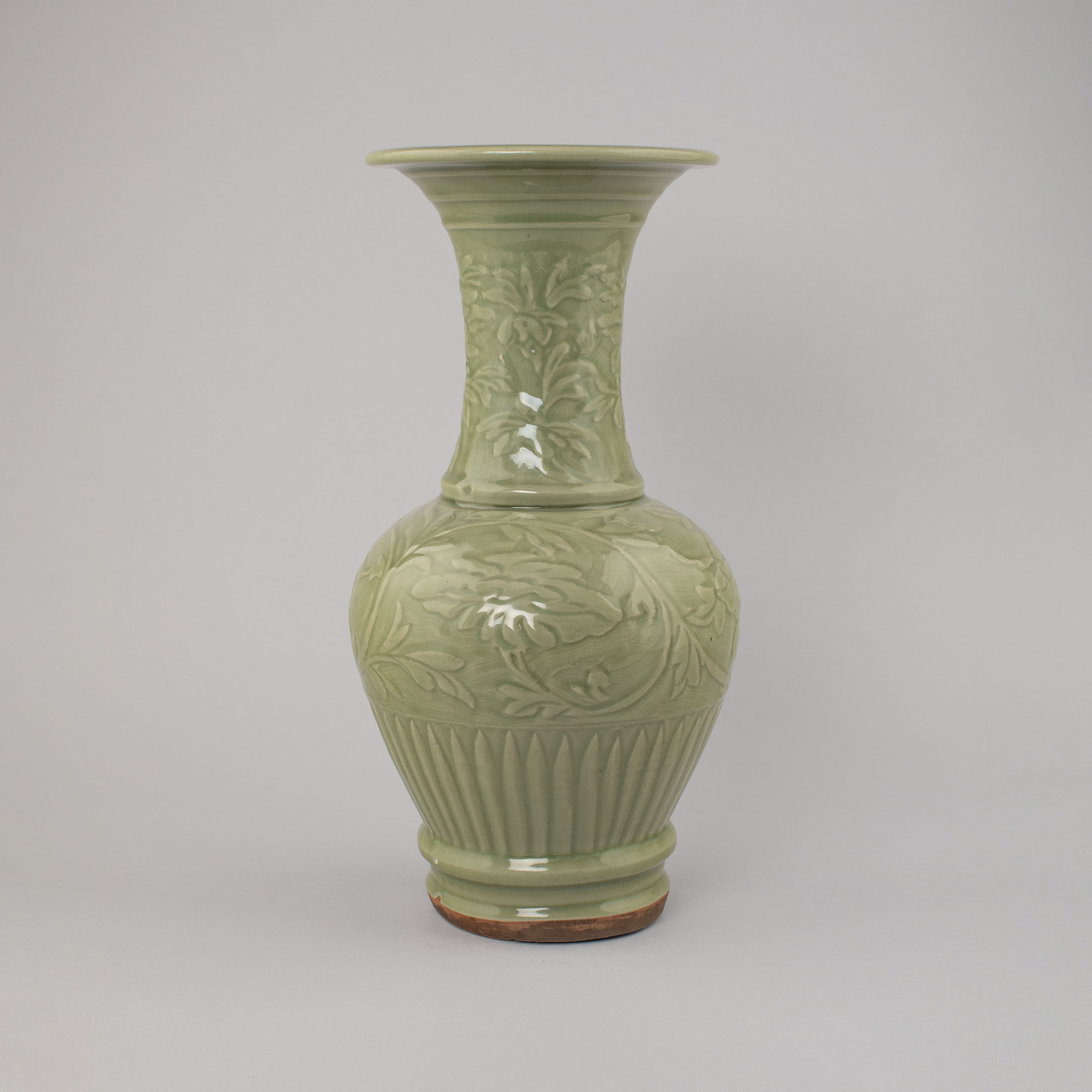
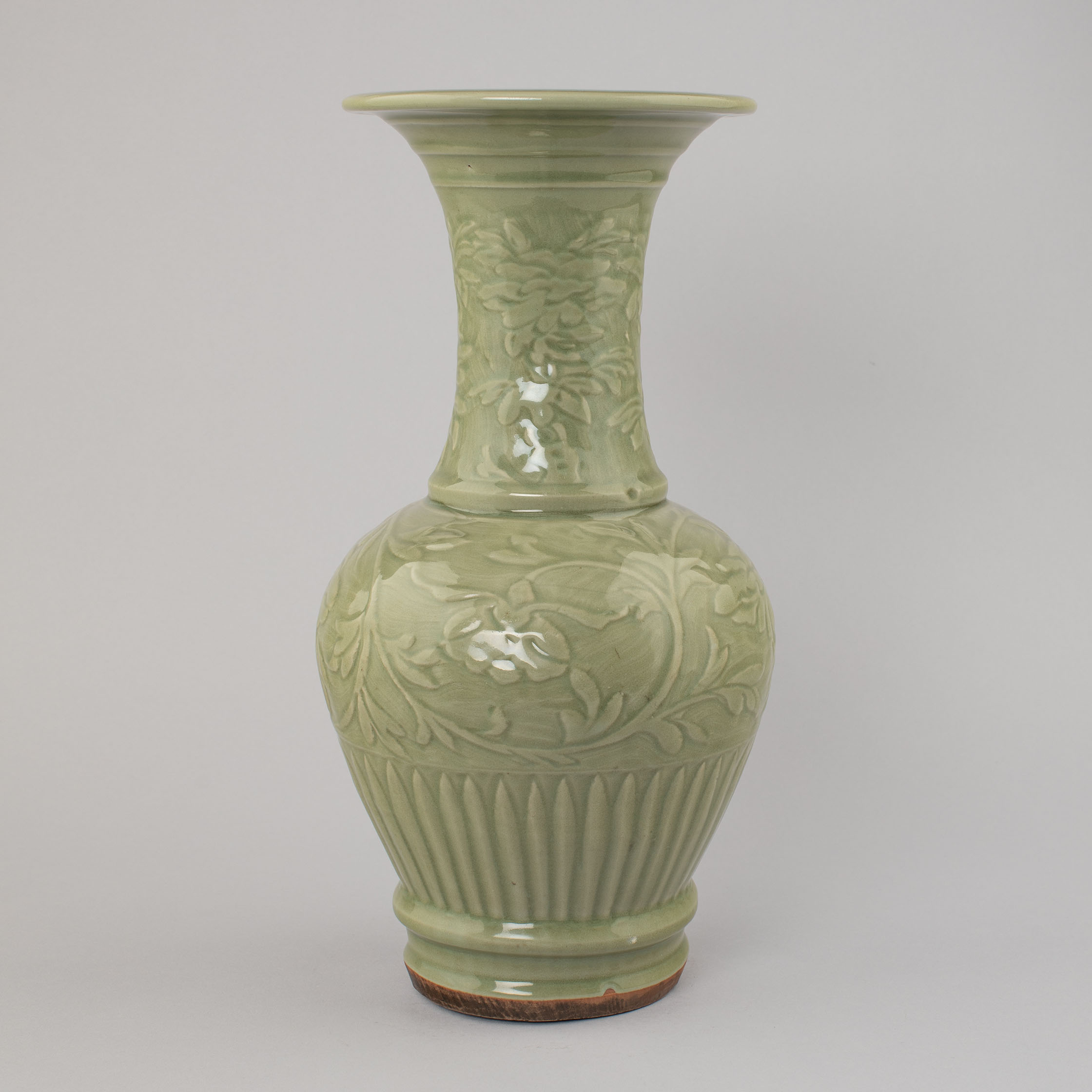
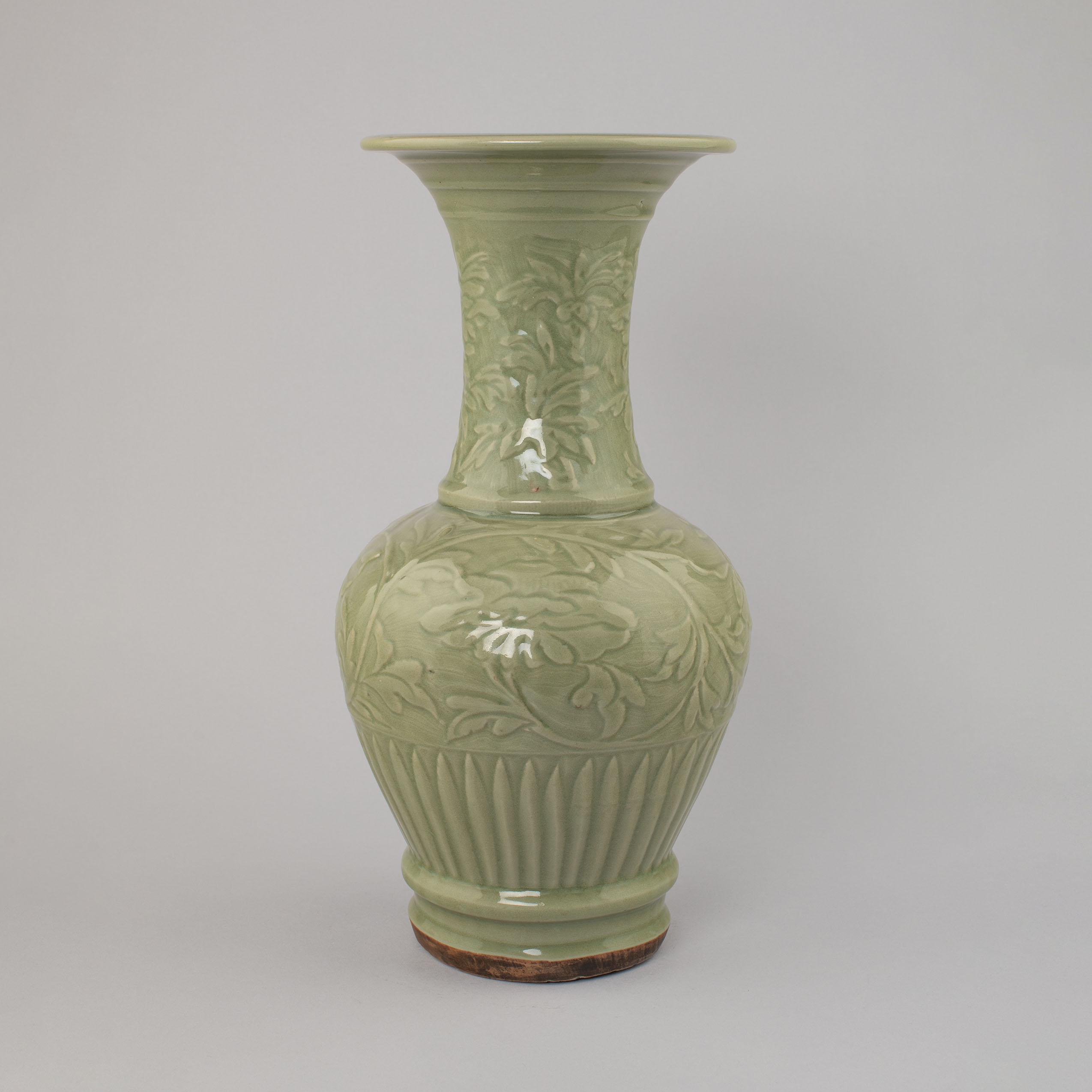
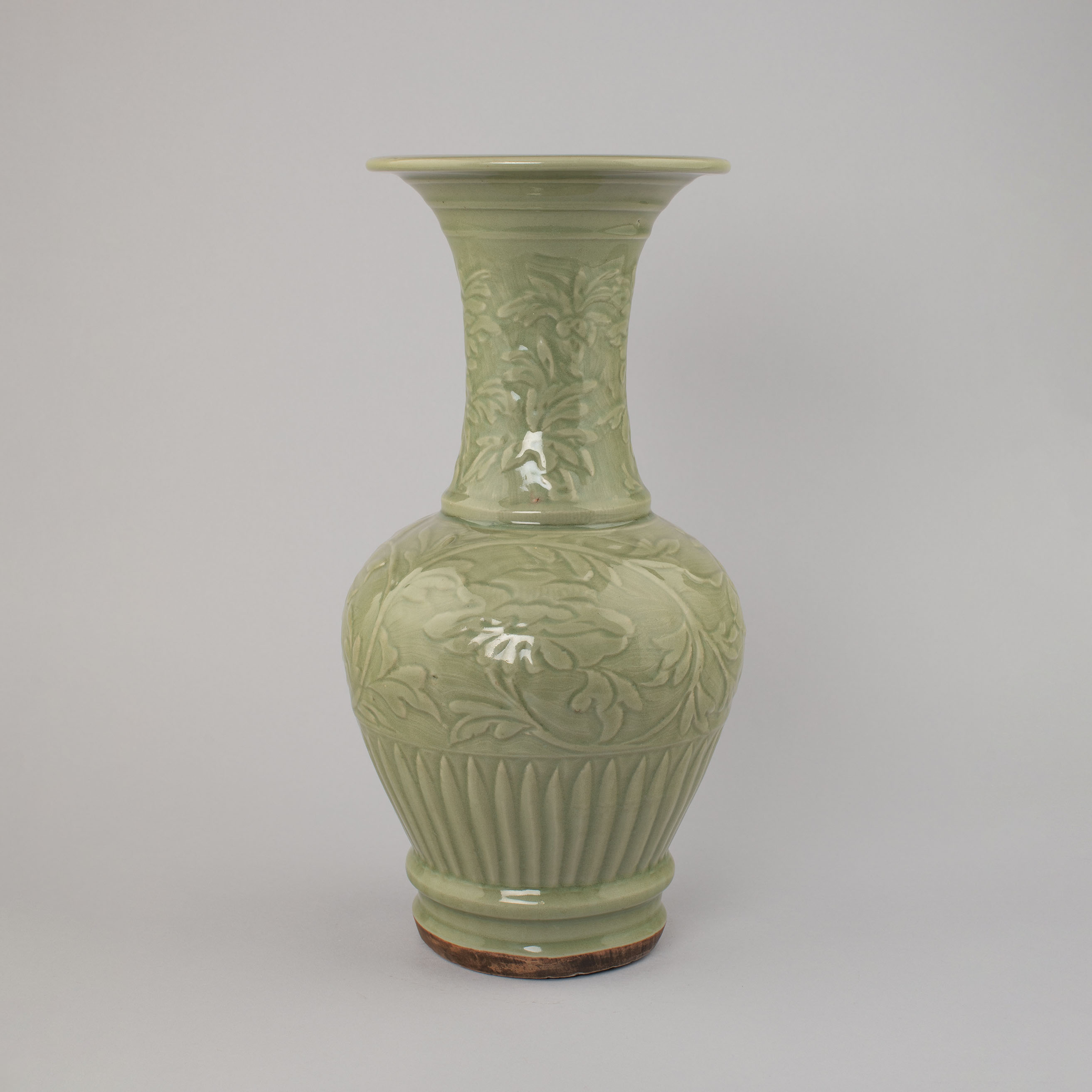
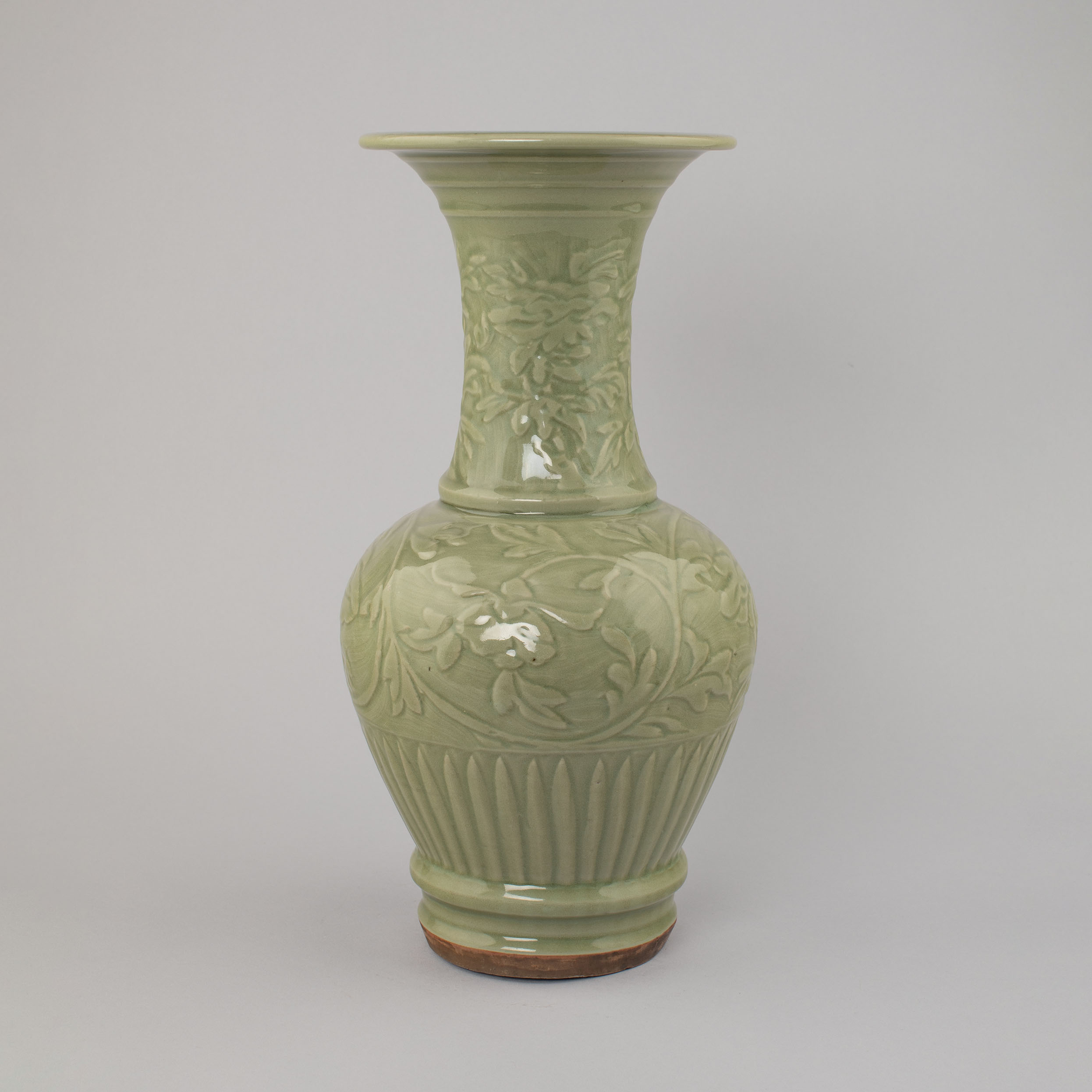
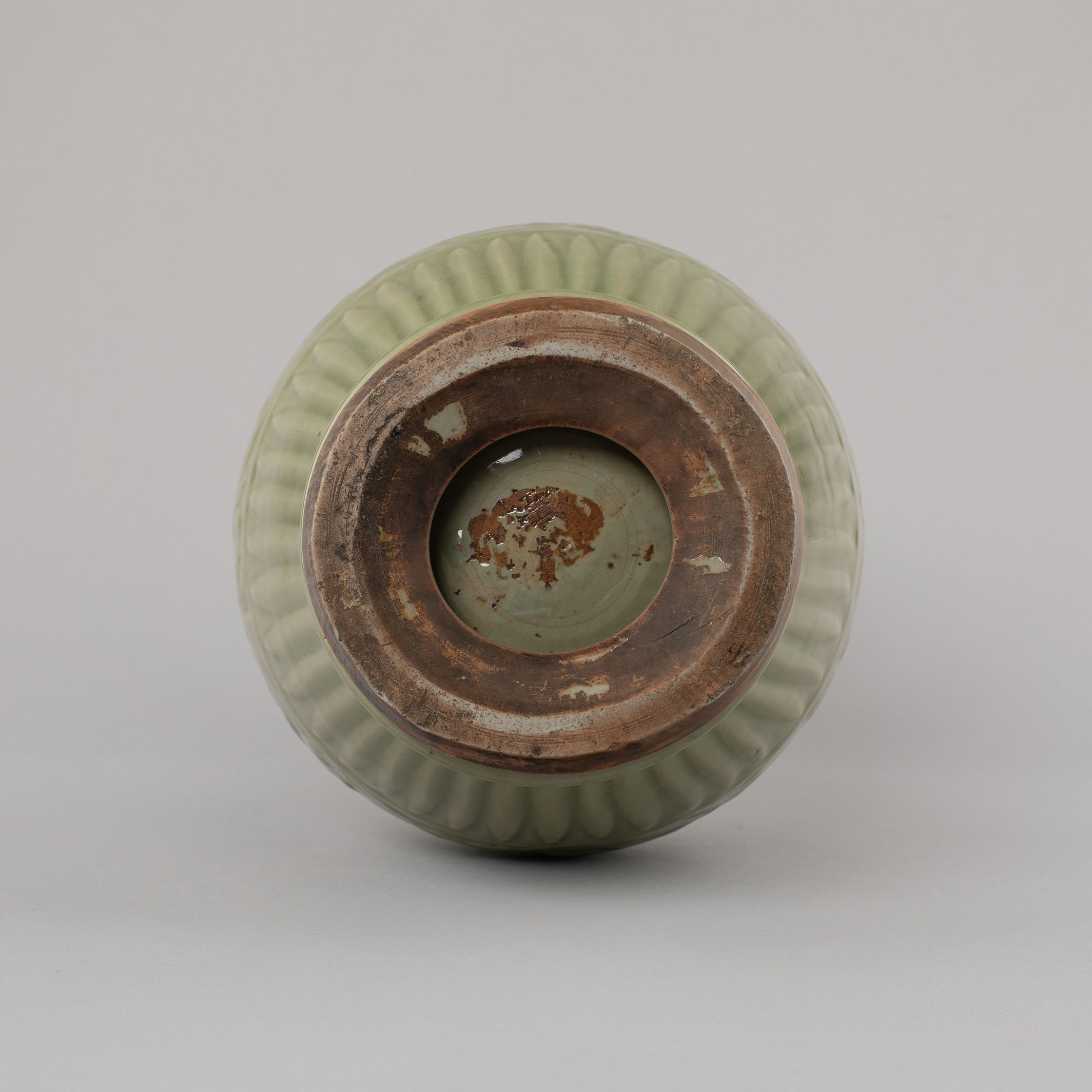
Large Chinese Longquan celadon-glazed vase of yenyen, feng wei zun, phoenix-tail, form, with tall, cylindrical flared neck, baluster body and raised foot, carved with large peony blooms on a continuous leafy branch, repeated on the neck, all on a slightly combed ground, between three classic ribs beneath the flared rim and with upright leaves above the foot, the footrim burned red in the firing with recessed glazed base, covered overall in a rich and even, luminous celadon glaze.
Circa 1400.
45.5 cm high.
Provenance & Additional Information
- From an old Japanese private family collection, acquired in the early 20th century then by direct descent.
- A similar vase in the Kyoto National Museum was included in their exhibition of Chinese Ceramics, The Most Popular Works Amongst Japanese, no. 43.
- The earliest example of this form and type is the Longquan celadon vase in the Percival David Foundation, dated to 1327. A slightly later version, dated to the early Ming with the shoulder more sloping, is in the Qing Palace Collection at the Palace Museum, Beijing, and is illustrated in Longquan of the World, Longquan Celadon and Globalisation, Vol. II, State Vessels, no. 105, p. 176; another related vase, described as having come from the Zhejiang Province and bequeathed by Mrs. B. Z. Seligman, is illustrated by Jessica Harrison-Hall, Ming Ceramics in the British Museum, 16:26, p. 472, where the author notes: “Two dated vases in the Percival David Foundation of Chinese Art, London, have similar decoration. One is inscribed seventh year of Xuande (AD 1432) and the other fifth year of Jingtai (AD 1454)”.
Condition
Excellent condition, minute flake on raised flange.
Similar Items

M4241
£18,000A rare and large Chinese porcelain blue and white bowl painted on the exterior with a dragon and phoenix bird amongst stylised flames, waves and flower sprays, the interior painted with a bird perched on rockwork amongst flowers encircled by a wide band of different flower sprays beneath butterflies in flight, blue glazed washed rim.
14 7/8 inches, 37.7 cm diameter
Wanli, 1573-1619.

23. M5356
£3,200Chinese turquoise glazed biscuit porcelain joss-stick holder in the form of the He He Erxian, both seated and smiling with their arms around each other, one holding a box, the other a floral branch and exposing their corpulent bellies protruding from their robes, above a singular circular joss-stick holder, with unglazed base.
2 ½ inches, 6.4 cm high.
Kangxi, 1662-1722.
Wood stand.
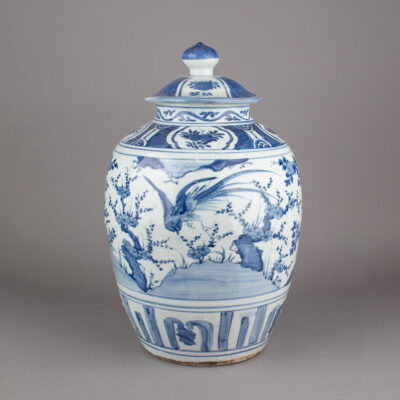
M5866
£18,500A large Chinese porcelain blue and white ovoid jar of kraak type, painted on the body with a wide band of a continuous scene with two pheasants, one in flight swooping down between two flowering plum trees, the other standing on light blue-washed rockwork, amongst flowering peony, prunus branches and wutong beneath cloud sprays, all between two classic kraak borders of lappets and fruiting reserves, dispersed between ruyi heads on a blue-washed keyfret ground, the neck with a continuous scrolling band, the cover with three fruiting branches, similarly painted to the shoulder, the base unglazed revealing the biscuit body.
Wanli, 1573-1619.
21 inches, 53.3 cm high.
