



明代及早期器物
明代瓷器可以说是中国陶瓷最有名的一种,在蒙古人统治的长达97年的元朝结束后,1368年明朝开始,中国回归了汉族人的统治。内战逐渐平息后,在世界文明的“瓷器之都”景德镇,明代陶瓷发展得蒸蒸日上。
符合宋代审美的单色瓷逐渐过时,青花瓷器在明代颇受欢迎。十五世纪的中国开始开放贸易后国内经济好转,同时欧洲正逢文艺复兴时期,成千上万的明代瓷器从中国来到西方,被宫廷和庄园主收藏,因而这个时期对明代瓷器的需求量急剧增长。
明代瓷器越发精致的同时,也产生了日后成为明瓷代表的创新装饰,比如宣德时期的祭红釉(近似血色的红釉,在各大博物馆的藏品一共不超过百件)、成化时期的斗彩、弘治的娇黄釉和万历五彩。万历时期(1572-1620)烧制技术有了提升,通过将高岭土和瓷石等比混合使瓷胎更白,从而令明青花之美更上一个台阶。
-

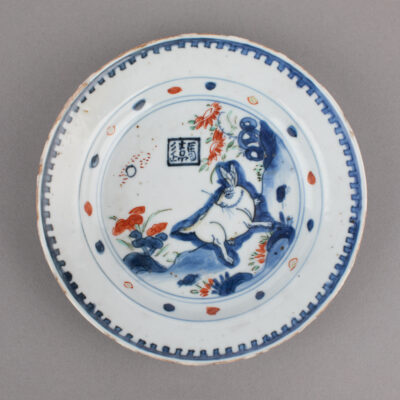
M4402
£2,850青花五彩‘赤兔纹’盘
-
M462
£POA亭台楼阁高士图掐丝珐琅挂屏
-
M4843
£8,500青花莲池芦雁纹深盘
-
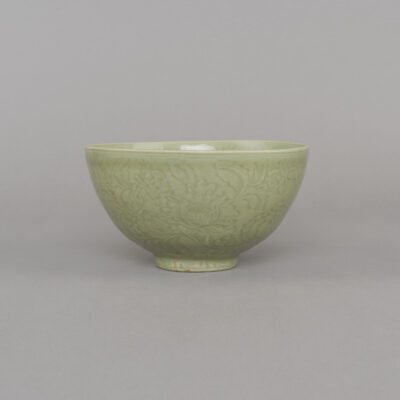
M4896
£68,000龙泉窑四季花卉碗
-
M4905
£23,500龙泉青釉三足冲耳炉
-
M4957
£16,500龙泉窑青釉八卦纹三足香炉
-
M4957
£16,500龙泉窑青釉八卦纹三足香炉
-
M5397
£9,800五彩高士图香炉
-
M5405
£7,500龙泉窑青釉镂空长方形博古插屏
-
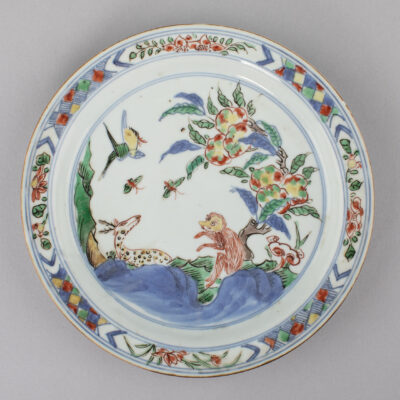
M5408
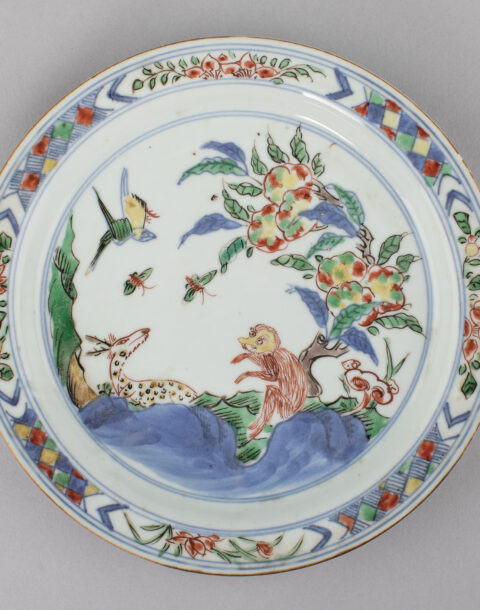
£6,850五彩灵猴献瑞花果纹盘
-
M5417
£POA龙泉窑缠枝牡丹纹蕉叶纹凤尾尊
-
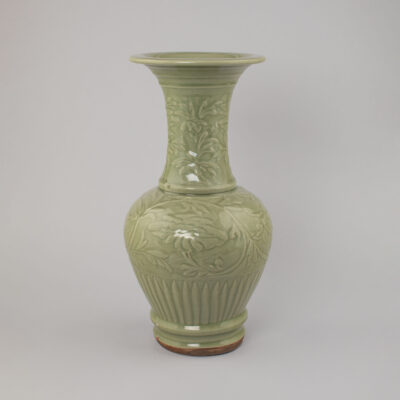
M5433
£72,000明 龙泉青釉刻花凤尾尊,大型,器身作凤尾式,长直筒形外撇颈,鼓腹,圈足外撇。通体刻缠枝牡丹纹,腹部及颈部均饰硕大牡丹花及连枝叶纹,地施浅梳状刻纹;外撇口沿下饰三道弦纹,足部上方饰仰叶纹。圈足边缘烧造时呈红褐色,底部内凹并施釉。通体施丰润均匀、晶莹明丽的青釉。
-
M5518
£8,500龙泉窑青釉八卦方型香炉(带盖)
-
M5540
£POA青花五彩人物故事纹梅瓶 (带盖)
-
M5561
£16,500龙泉花卉纹碗
-
M5630
£7,500青花五彩双凤纹方形盘
-
M5779
£23,500青花喜上眉梢三友花口大盘
-
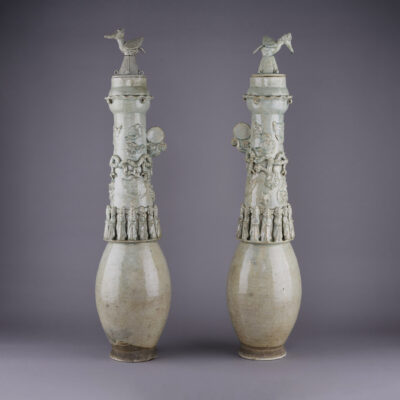
M5798
£12,500青白贴花道教人物及龙虎纹谷仓罐及盖







Further information on 明代及早期器物
Early Ming dynasty ceramics took inspiration from the intricate but busy Islamic styles of the outgoing Yuan Mongols but it wasn’t long before the Han started to exert their own influences on design. From the 15th century onwards, Ming porcelain decoration became more subtle and restrained but as demand grew from Japan and Europe, it once again became more elaborate. It was one of China’s major exports and was often exchanged for Spanish silver. By the sixteenth century, Ming dynasty porcelain included vibrant colours such as blues, reds, greens and yellows.By the late sixteenth and early seventeenth centuries, it was becoming increasingly common for producers of Ming pottery and Ming porcelain to add imperial reign dates to their wares and there started a trend for artists to sign their wares. A signature on a Ming vase of one of the most highly respected Ming dynasty porcelain artists could dramatically affect its price, such was the reputation of some of the artisan craftsmen of the era, not unlike the European painters of the day.
您也可以关注

绘画
中国绘画,以水粉水彩为主

清代瓷器:三家私人珍藏
来自唐绍仪、Henry Mazot和Jeffrey Stamen三位私人藏家的旧藏
康熙素燒陶器:法國私人珍藏
2023年10月23日週一至11月3日週五 來自單一私人收藏的40 件康熙及 17 世紀陶瓷展覽
