


Chinese Porcelain for the Japanese Market
For centuries, the kilns at Jingdezhen had produced the vast majority of the porcelain that ended up in the Imperial court and domestic markets but in the final decades of the Ming dynasty after the death of Emperor Wanli in 1619, the lack of imperial patronage forced the hands of the kiln owners. The needed to look for new markets and they started to make Chinese porcelain for the Japanese market.
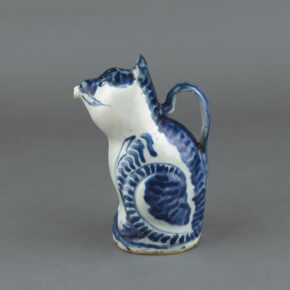
Known as ko-sometsuke – ‘ko’ meaning ‘old’ and ‘sometsuke’ meaning ‘blue and white’ and produced between 1620 and 1645, it was an underglaze blue Chinese porcelain for the Japanese market manufactured to coincide with the increasing popularity of the tea ceremony that required a number of specific utensils. Ko-sometsuke porcelain was manufactured entirely to Japanese tastes and sensibilities.
Often called Tianqi porcelain (tenkei in Japanese) after the Ming emperor who reigned from 1621 to 1628, Ko-sometsuke porcelain, due to its uniqueness in the timeline of Chinese ceramics, is highly desirable by both collectors of Chinese porcelain and also those fascinated by the use of old blue and white porcelain in the traditional Japanese tea ceremonies.
The production techniques and designs of the old blue and white porcelain were a marked departure from the traditional Chinese methods. Ko-sometsuke porcelain was intentionally manufactured using poorly levigated clay and roughly potted with inconsistencies or imperfections that appealed to the Japanese. Often the glaze would flake off the body of the vessel and these edges, known as mushikui, or ‘earth worm nibbles’ were particularly prized.
In recent years discoveries have been made at Jingdezhen revealing the Tianqi strata of the shard heaps and ko-sometsuke fragments even with Tianqi marks have been revealed.
-

26. M4415
£8,500Chinese porcelain blue and white sweetmeat dish, mukozuke, in the form of a shell on three short circular feet, painted with a large shrimp amongst aquatic plants with lobed and ribbed shell end, heightened on both sides with fukizumi.
-
33. M3485
£14,500Chinese porcelain blue and white large saucer dish painted in the centre with a seated scholar leaning on a rockwork table, looking out at a waterfall emerging from the rocks and causing ripples on the river, all in a landscape scene with overhanging rockwork and plants beneath a cloud bank and birds in flight, all within a single line, the reverse with two birds perched amongst branches between double lines, the base glazed white.
-
34. M4595
£8,500Chinese porcelain blue and white ‘snowflake’ form deep bowl, with wide flat everted octagonal foliate rim with horseshoe indentations, painted in the centre with a flower head on a leafy branch encircled by a ribbon-tied lozenge, ribbon-tied music stones and two pairs of crossed hu tablets amongst leaves, all within a double ring, the flat wide everted rim painted with two swallows in flight between long branches with flower and leaves, all within a blue-washed border, the underside with two pairs of lozenges and pearls.
-
36. M4408
£8,500Chinese porcelain blue and white food bowl with irregular foliate rim, painted on the well of the interior with a scholar and attendant standing on a rocky promontory in a river landscape scene, all within a double ring, the deep cavetto with three insects in flight between three prunus flower heads, all beneath a blue-washed rim, the exterior with a butterfly, two insects and two prunus flowers, all on three short bracket feet.
-
37. M3502
£38,000Chinese porcelain blue and white summer mizusashi, water container, painted on the interior with two buffalo amongst clumps of grass beneath ruyi-clouds and mountains in the distance, all within a double ring, the exterior with a single rib and stripes imitating a barrel, the foot rim and base unglazed revealing the biscuit body.
-
40. M4416
£11,500Chinese porcelain blue and white large circular deep dish with flat everted rim, painted in the centre with a circular fruit within a six-pointed flower head, encircled by anhua flower heads on a scrolling branch with leaves, within a flower head band and a double ring, the rim with eight blue-ground Yamamoto family mon roundels, eight hexagonal flower head medallions and eight stylised flowers above a triangular diaper in the cavetto, all within a pale blue-washed rim, the exterior with nine flower heads, the flat base unglazed revealing the biscuit body.
-
41. M4406
£11,500Chinese porcelain blue and white hexagonal deep dish with upright sides painted with a rooster standing on a rocky promontory crowing at the rising sun, beside flower sprays and insects in flight, with cloud banks and mountain peaks in the distance, all within a single blue line and beneath a blue-washed band on the rim, the flat base unglazed.
-
42. M4704
£14,500Chinese porcelain blue and white hexagonal lobed deep dish painted in the centre with a pair of birds, one perched on a flowering peony branch, the other with open wings standing amongst rockwork looking up at its mate, amongst grasses and blue-washed flower sprays encircled by a wide hexagonal cash diaper with six flower heads of lotus, poppy, chrysanthemum, peony, pomegranate flower and tree peony, all beneath the upright brown-dressed rim.
-
44. M4404
£14,500Chinese porcelain blue and white deep saucer dish of shonzui style with fluted body, hariki petal-shape needle-point rim, painted on a blue ground with two phoenix birds, one standing beside a tree with peony blossom, rockwork, fruiting lingzhi and three precious objects, the other phoenix behind the rock looking back at its mate, encircled by six ruyi-head lappets of aster, camellia and magnolia, all beneath a brown-dressed rim, the underside with a continuous branch of morning glory flowers and buds, the base with a six-character mark of Chenghua within a double ring.
-
49. M4904
£12,500Chinese porcelain blue and white shonzui-type faceted decagonal bottle vase of double-gourd form, tokuri, with each facet fluted and ribbed and painted with geometric designs including interlocking keyfret, scrolls, wan-characters, interlaced cash, plum blossom flowers on hexagonal blue ground, weave-pattern, ‘chess-board’, diamonds and flowerhead diaper, between a keyfret band at a narrow waist, the flat unglazed base with short foot rim revealing the fine white biscuit body, the rim slightly reduced with old metalwork fitting.
-
M4472
£3,850Chinese porcelain blue and white kosometsuke deep plate with everted rim, painted in the centre in vivid blue tones with a fisherman standing at the stern with the rectangular sail open, with rock work in the foreground and a two-tiered pagoda in the distance beneath the moon, with an unusual lappet border in the form of a flower, the underside with sprays of branches.
-
M5625
£5,850Chinese porcelain ko-akai small saucer dish painted with a bird perched on a flowering camellia branch with green leaves beneath a sun and swirling iron-red clouds, encircled by an iron-red line, the underside with stylised precious objects.
-
M5633
£6,850Chinese porcelain blue and white kosometsuke octagonal lobed dish with indented corners, painted with three deer gambling and one reclining on grass beneath an overhanging pine tree issuing from rock work with flowers and shrubs, encircled by a scrolling lotus flowerhead border with ruyi-form branches.
-
M5511
£3,850A Chinese porcelain ko-akai, wucai, square dish, painted in the centre with a crosshatch design of different polychrome grounds including key-fret, cash, tile, scale and chainmail dispersed between iron red flower heads of lotus, prunus and camellia, encircled by a band of butterfly and insects beneath a flat everted rim, painted with crested swirling waves, the chamfered corners with pendent flowers.
-
M5516
£4,250A Chinese porcelain blue and white kosometsuke plate, painted in the centre with a rabbit with his head turned upwards in white on an underglaze blue roundel, encircled by four different geometric grounds including key-fret, cash, chainmail and scales, divided by a cross, each terminating with a pair of cions, all beneath a blue ground boarder, on a scrolling ground, the underside with flower heads and scrolls.
-
M5382
£3,850Japanese porcelain sake bottle, tokuri, with a celadon lavender crackled glaze, the body of fruit form, the indented underside forming three naturalistic feet, with slender neck and slightly everted rim in brown revealing the body. 4 ½ inches, 11.5 cm high. Kawase Shinobu, 2017. Wood box, described as ‘celadon tokuri’, signed and with artist’s seal, Shinobu, on the interior of the cover and the orange cloth, with the seal, ki-hen-syo-chu.
-
M4738
£42,000Chinese porcelain wucai four-tiered square picnic box and cover with indented corners, the cover painted with five crane medallions amongst clouds, each side with two chrysanthemum blooms and foliage and each section interior with two orchids, three bases with a six-character mark of Chenghua in iron-red, the flat white biscuit base unglazed.
-
M4835/6
£18,000Pair of Chinese porcelain blue and white kosometsuke small food bowls in the form of jardinières, each painted on the exterior with nine branches of bamboo beneath stylised leaves on the flat everted foliate rim.





Further information on Chinese Porcelain for the Japanese Market
This somewhat unique Chinese porcelain for the Japanese market was delightfully eccentric and displayed a refreshingly spontaneous, almost nonchalant style in comparison with traditional Chinese porcelain. Designs included landscapes, birds, flowers, animal and human representations and the ko-sometsuke vessels ranged from the classic to the asymmetrical to the humorous and downright odd.
While the Jingdezhen potters were turning their collective hands to the production of ko-sometsuke, or old blue and white porcelain, the approximate 45-year period of its manufacture was both representative of their ability to adapt but also a high point of the cultural interactions between Japan and China during that time.
You should also check
Blanc de Chine 2024
Blanc de Chine, the luminous white ceramic revered for its delicate beauty, will be presented for the fifth time since the gallery’s 60th Anniversary exhibition in 1985. An exhibition of 34 pieces.
Monochromes
Objects of single-colour.

Blanc de Chine
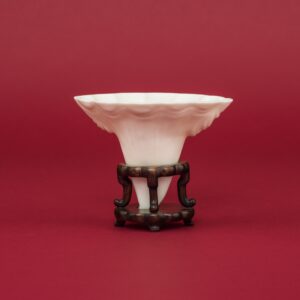
Objects from the Ming and Qing dynasties made in Dehua County, Fujian Province, all with a white-glaze.
