


Chinese Porcelain for the Japanese Market
For centuries, the kilns at Jingdezhen had produced the vast majority of the porcelain that ended up in the Imperial court and domestic markets but in the final decades of the Ming dynasty after the death of Emperor Wanli in 1619, the lack of imperial patronage forced the hands of the kiln owners. The needed to look for new markets and they started to make Chinese porcelain for the Japanese market.
Known as ko-sometsuke – ‘ko’ meaning ‘old’ and ‘sometsuke’ meaning ‘blue and white’ and produced between 1620 and 1645, it was an underglaze blue Chinese porcelain for the Japanese market manufactured to coincide with the increasing popularity of the tea ceremony that required a number of specific utensils. Ko-sometsuke porcelain was manufactured entirely to Japanese tastes and sensibilities.
Often called Tianqi porcelain (tenkei in Japanese) after the Ming emperor who reigned from 1621 to 1628, Ko-sometsuke porcelain, due to its uniqueness in the timeline of Chinese ceramics, is highly desirable by both collectors of Chinese porcelain and also those fascinated by the use of old blue and white porcelain in the traditional Japanese tea ceremonies.
The production techniques and designs of the old blue and white porcelain were a marked departure from the traditional Chinese methods. Ko-sometsuke porcelain was intentionally manufactured using poorly levigated clay and roughly potted with inconsistencies or imperfections that appealed to the Japanese. Often the glaze would flake off the body of the vessel and these edges, known as mushikui, or ‘earth worm nibbles’ were particularly prized.
In recent years discoveries have been made at Jingdezhen revealing the Tianqi strata of the shard heaps and ko-sometsuke fragments even with Tianqi marks have been revealed.
-

M4835/6
£18,000Pair of Chinese porcelain blue and white kosometsuke small food bowls in the form of jardinières, each painted on the exterior with nine branches of bamboo beneath stylised leaves on the flat everted foliate rim.

Further information on Chinese Porcelain for the Japanese Market
This somewhat unique Chinese porcelain for the Japanese market was delightfully eccentric and displayed a refreshingly spontaneous, almost nonchalant style in comparison with traditional Chinese porcelain. Designs included landscapes, birds, flowers, animal and human representations and the ko-sometsuke vessels ranged from the classic to the asymmetrical to the humorous and downright odd.
While the Jingdezhen potters were turning their collective hands to the production of ko-sometsuke, or old blue and white porcelain, the approximate 45-year period of its manufacture was both representative of their ability to adapt but also a high point of the cultural interactions between Japan and China during that time.
You should also check

Kosometsuke & Shonzui 2024
Assembled over almost 25 years, the kosometsuke exhibition includes a diverse selection of blue and white wares, including rare dishes, imaginative vessels, and captivating scenes on tea ceremony pieces. 50 piece exhibition, November 2024

Chinese Export
Objects made in China for the purpose of being exported to the West.
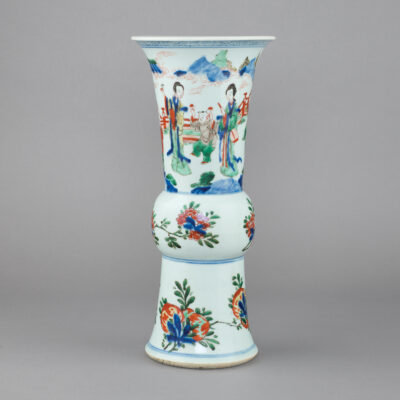
Wucai
‘Wucai’ Chinese five coloured wares, predominantly red, green and yellow enamels combined with underglaze blue and the white body.
