


26 – M4491/2
Description
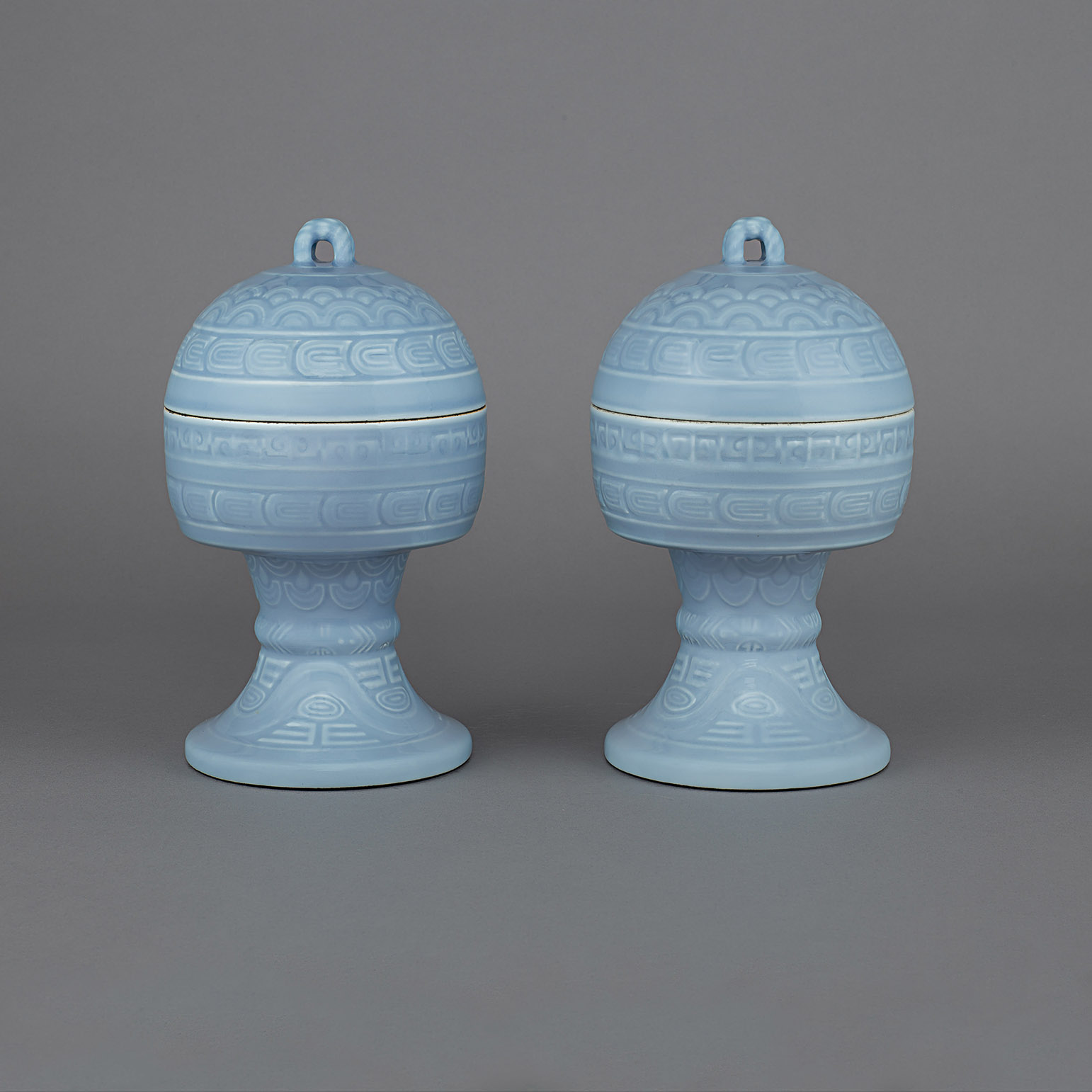
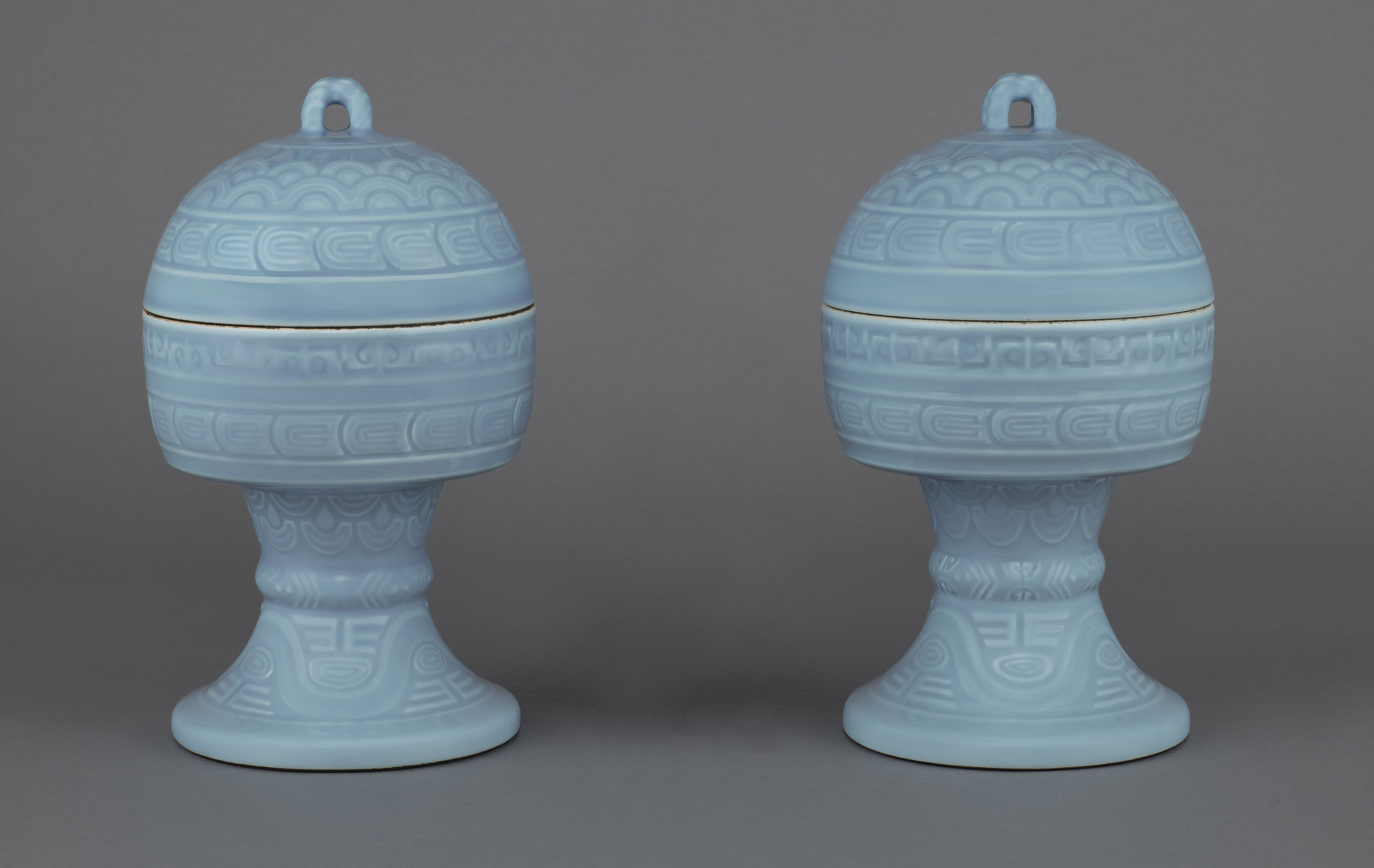
Pair of Chinese imperial porcelain lavender-glazed altar vessels and covers, dou, each modelled after an archaic bronze with moulded and carved archaic designs, the upright body with ribs and bands all on a splayed, ribbed foot, the cover with a design of scrolls, fretwork and two registers of stylised waves beneath a double-rope twist openwork finial, covered overall including the interior and underside in a luminous, rich and even lavender glaze, all the rims dressed in brown in veneration of the archaic prototype.
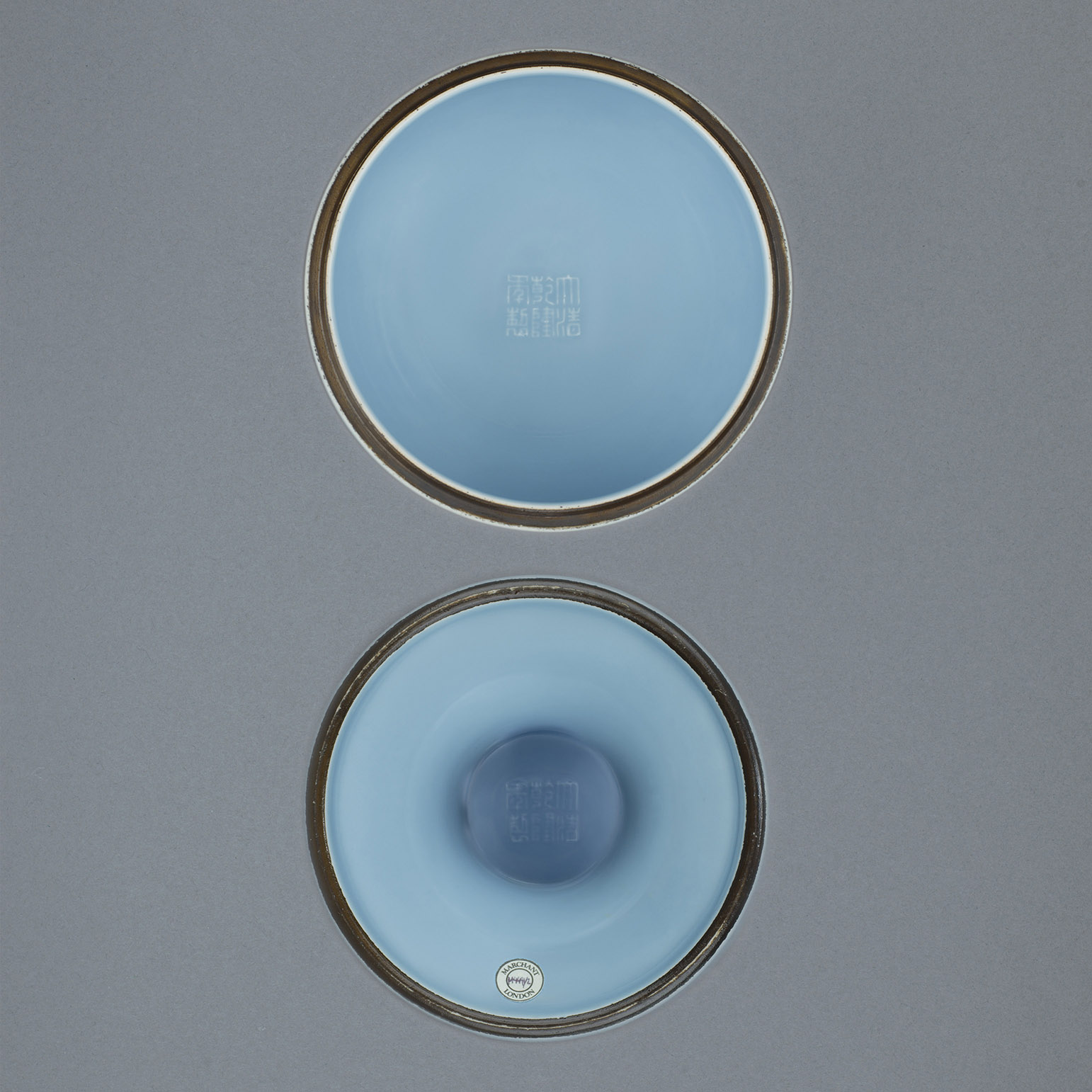
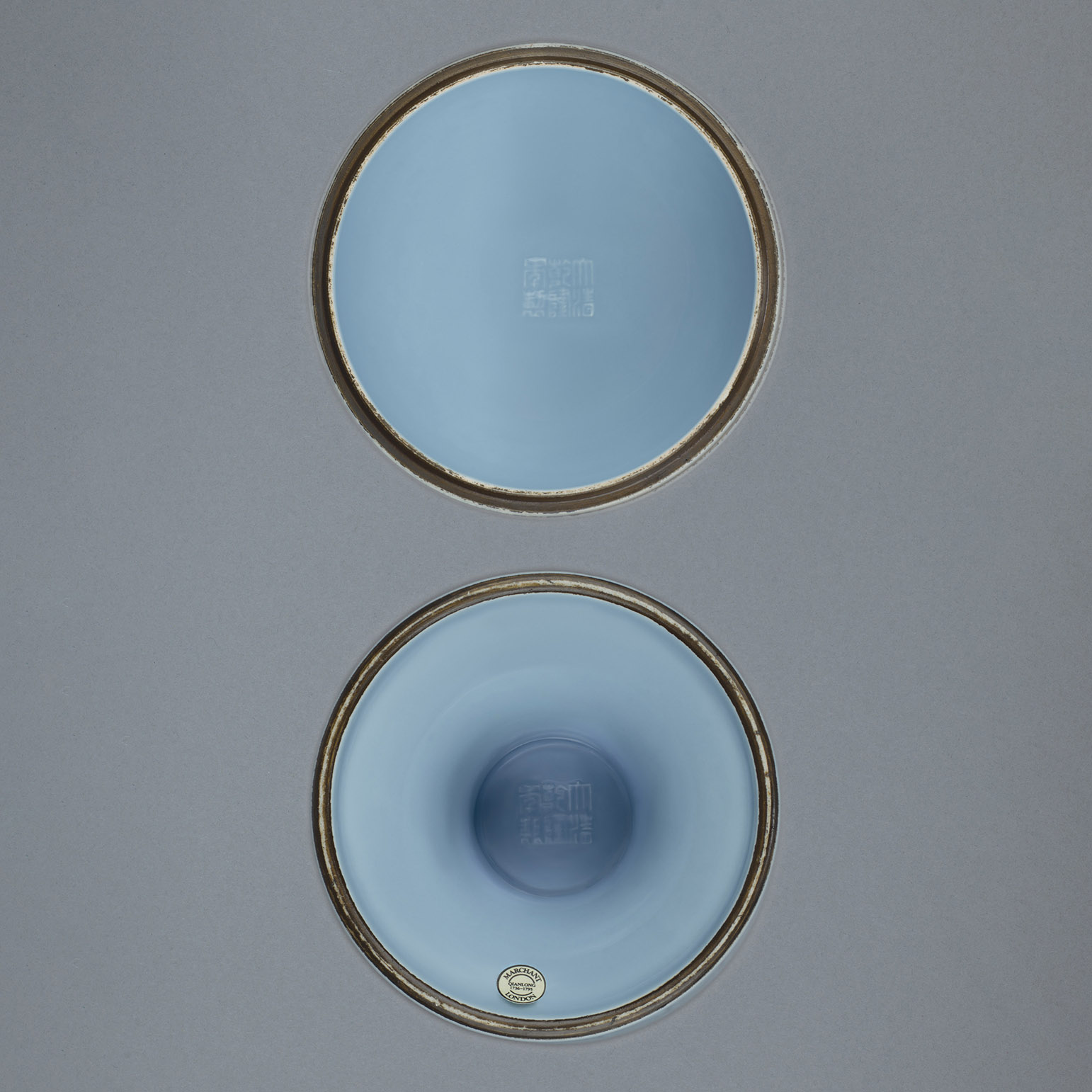
The interior of the cover and the underside of the base of each with a six-character sealmark of Qianlong and of the period, 1736-1795.
9 ¾ inches, 24.8 cm and 9 ⅞ inches, 25.1 cm high.
Provenance & Additional Information
- From the collection of the Gandolfini family,
- Sold by Marchant 28th October 2009.
- From the collection of Nico and Catherine Kairis.
- Included by Sotheby’s Hong Kong in Marchant, Part II, Qing Imperial Porcelain, 29th April 2022, lot 3516, pp. 44-47.
- Included by Stuart Marchant in Marchant – One Hundred Years, Volume II: 2001-2005, no. 1727, p. 353.
- A similar dou was included in the catalogue of the special exhibition of Ch’ing-Dynasty Monochrome Porcelains in the National Palace Museum, Taipei, 70, p. 119, and again by Michel Beurdeley and Guy Raindre in Qing Porcelain, Famille Verte, Famille Rose, New York, 1987, no. 220, p. 156, colour plate p.157, where the authors note that the dou was used for cooked food: “Executed in the style of archaic bronzes, the vases were made in the imperial factory at Jingdezhen and enamelled with a soft lavender-blue glaze in imitation of the yingqing wares of the Song period. Tang Ying’s notes for Spring 1741 state ‘Tang made vases for the temple of the holy immortal and celestial mother in Beijing.’” A further identical example was sold by Sotheby’s New York in their auction of Informing the Eye of the Collector, Chinese Ceramics and Works of Art from J. T. Tai & Co., 22nd March 2011, lot 117 (in a group of monochrome vessels); a pair of white examples from the Qing Court Collection in the Palace Museum, Beijing, collection nos. GUI86402 and GUI86403, were included by Evelyn S. Rawski and Jessica Rawson in China: The Three Emperors, 1662-1795, Royal Academy of Arts, 2005, no. 34, p. 396, where it is noted that the Emperor ordered the grand secretaries to consult classical texts when designing the ritual objects and that the shapes ought to reflect those of archaic ritual paraphernalia. Dou of this type derived their inspiration from bronze grain containers of the Eastern Zhou Dynasty (770-256 BC). Ritual vessels made in the Qianlong period were described by Margaret Medley in the 1959 edition of the album Huangchao liqi tushi/ Illustrated Regulations for Ceremonial Paraphernalia of the Qing Dynasty, with the form of dou illustrated in scroll 1.
- The Qianlong Emperor issued a decree in 1748 that porcelains of the appropriate colour were to be used at certain altars and For instance, ritual vessels used at the altars of the Four Cardinal Directions, the Altar of Heaven, the Altar of Moon, the Altar of Sun and the Altar of Earth, were all of similar form but coated in blue, white, red and yellow glazes respectively.
Condition
Overall in excellent condition, without any chips,crcaks,or restoration.

Similar Items

M5095
£35,000Chinese imperial porcelain fencai large thickly potted dish, finely painted with five-clawed iron-red and blue dragon on each side of a flaming gilt pearl, all amongst stylised ruyi-clouds and flames within a wide gilt band, the underside with an aubergine dragon and another iron-red dragon with two pearls amongst stylised clouds and flames.
13 ½ inches, 34.3 cm diameter.
The base with a six-character mark of Guangxu in iron-red and of the period, 1875-1908.

M5518
£8,500Chinese longquan celadon insense burner and cover of square form, moulded on the exterior in relief with four panels with the Eight Trigrams, repeated twice, within a relief frame, the flat cover surmounted by a Buddhist lion, holding a brocade ball and ribbon it its front paws.
Ming dynasty, 16th century.
Overall height 5 1/4 inches, 13.3 cm

29. M4751
£9,500Chinese ceramic green glazed monochrome pillow, zhen, of ruyi-head form, incised on the gently concave top with outlines following the form, with further incised lines beneath the sloping shoulder, the fluted body covered overall in a rich and even deep apple green glaze, the flat predominantly unglazed base revealing the buff-coloured body, with an air hole from the firing beneath the ruyi-head point.
11 inches, 28 cm long; 7 inches, 17.8 cm deep; 4 ½ inches, 11.5 cm high. Northern Song – Jin dynasty, 11th – 12th century.
Japanese wood box.
