


Imperial
To tell the story of Imperial Chinese porcelain is in some ways to tell the story of China itself. Fascinating, vibrant, richly varied and a beautiful artform that has beguiled, intrigued and captivated the rest of the world for millennia.
Chinese Imperial porcelain, often known as Imperial ware in China (Guan yao), is porcelain specifically manufactured for the Chinese emperor and the Imperial household. The first Imperial kiln was founded during the second year of the Ming dynasty (1369) in Zhushan (Pearl Hill) in the southern city of Jingdezhen.
The official kilns making Imperial Chinese porcelain in Jingdezhen were established in the fourteenth century and pieces of Chinese Imperial porcelain produced at the factory were marked with an official nian hao, or reign mark. The marks were applied to the pieces by a very small number of highly specialised craftsmen, some of whom spent their entire working lives painting the same nian hao.
-

M5241
£58,000Chinese imperial porcelain yellow-glazed vase with ovoid body and short, flared neck, covered overall in a rich imperial yellow glaze running to the interior of the mouth and to the base. 9 1/4 inches, 23.5 cm high.
-
M5792
£18,500Chinese imperial porcelain copper-red glazed saucer dish, thinly potted with gently flared lipped rim, covered overall in a rich and even sang-de-boeuf glaze beneath the white-glazed rim.
-
1 – M5144
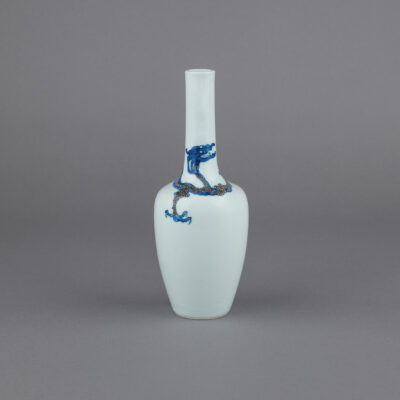
£POAChinese imperial porcelain underglaze blue and copper-red bottle vase with tapered baluster body, chang jing ping, tall cylindrical neck and lipped rim, painted with an open-mouthed three-clawed chilong dragon encircling the body, the scales in underglaze copper-red.
-
2 – M5253
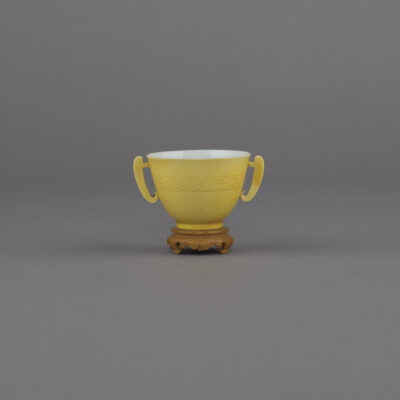
£POAChinese imperial porcelain yellow-glazed two-handled wine cup, erbei, thinly potted and incised on each side with a continuous anhua band of archaic style dragons facing each other with open mouths, between a pearl, all on a short foot rim and covered overall in an even pale-yellow glaze, pooling on the foot rim between two upright loop handles with curled ends, the interior glazed white.
-
3 – M5542
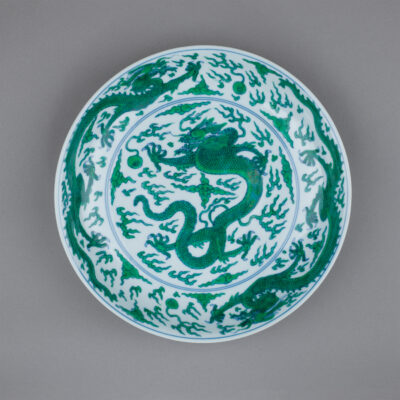
£POAChinese imperial porcelain green dragon dish, pan, with gently flared rim, the design outlined in underglaze blue, painted in the centre with a five-clawed dragon in green glaze, in pursuit of a flaming pearl amongst stylised flames and ruyi-clouds within a double line, encircled by two further similar dragons, the underside similarly decorated, with the dragons above a lappet band.
-
4 – M5388
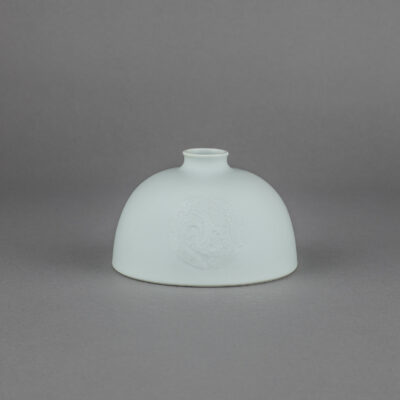
£POAChinese imperial porcelain white-glazed waterpot of beehive form, taibaizun, with gently flared lipped rim, moulded and carved with three relief archaic style dragon and phoenix medallions, covered overall in an even sweet-white glaze. The base with a six-character mark of Kangxi in underglaze blue and of the period, 1662-1722.
-
5 – M5503
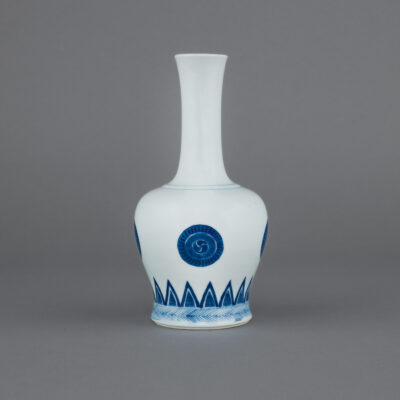
£POAChinese imperial porcelain blue and white slender necked baluster vase, of handbell form, yaoling zun, painted on the body with four circular medallions consisting of three bands forming the gankyil, “Wheel of Joy”, above stylised upright pointed leaves with scrolls and a wide herringbone band at the gently flared foot, the shoulder with a single rib within two lines.
-
6 – M4918
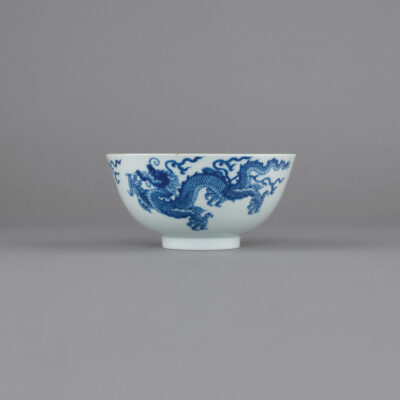
£POAChinese imperial porcelain blue and white dragon bowl, wan, thinly potted with gently rising upright sides on a short foot rim, painted with two five-clawed dragons with detailed scales and open mouths, each in pursuit of a flaming pearl, amongst stylised flames, the interior glazed white.
-
7 – M4919
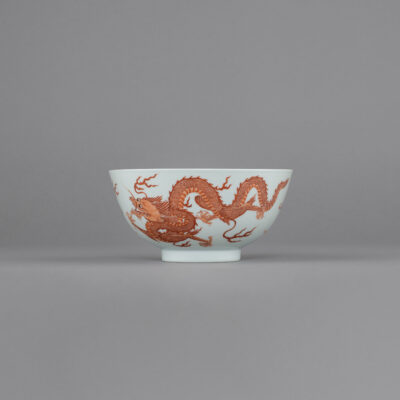
£POAChinese imperial porcelain iron-red dragon bowl, wan, thinly potted with gently rising upright sides on a short foot rim, painted with two five-clawed iron-red enamel dragons each in pursuit of a flaming pearl amongst ruyi-clouds and flames, the dragons’ eyes heightened in black enamel, the interior glazed white.
-
8 – M5279
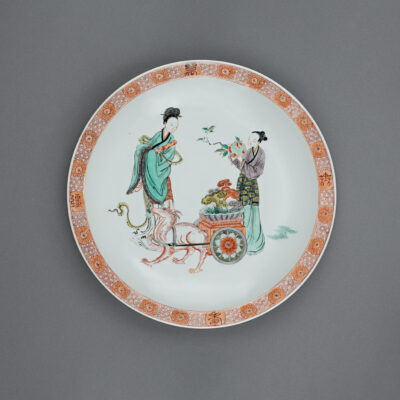
£POAChinese imperial porcelain famille verte birthday dish, pan, with flat everted lipped rim, painted in the centre with Lady Magu standing holding a scroll looking back at her attendant with a large peach, beside a tethered mythical deer drawing a wheeled square jardinière supporting a fruiting lingzhi group, encircled by twenty iron-red flowerheads on a hexagonal diaper ground between four-character medallions, wan shou wu jiang, “endless longevity”.
-
9 – SMBM1
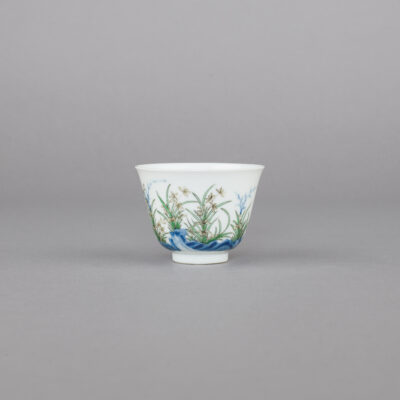
£POAChinese imperial porcelain famille verte month cup, hua shen bei, thinly potted with gently flared rim on a short foot, painted with orchids amongst long green leaves growing from rockwork with branches and grass, the reverse with a ten-character couplet and square seal in underglaze blue.
-
10 – M5480/1
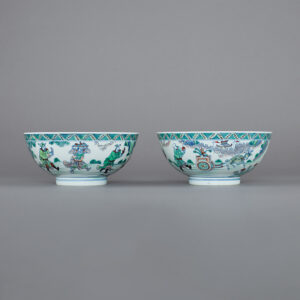
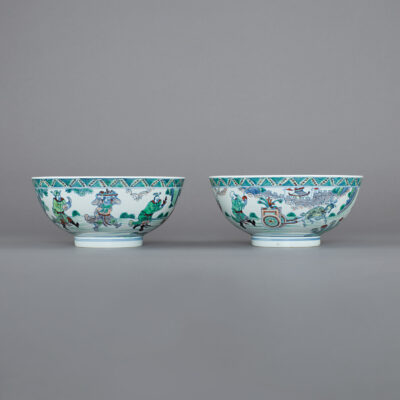
£POAPair of Chinese imperial porcelain doucai figural bowls of deep form, wan, thinly potted with upright sides, each painted on the exterior in a continuous landscape scene with five tribute bearers carrying incense bowls, an aquatic branch, a tray of fruit and a cornucopia, all following a tethered yellow-glazed deer pulling a carriage of aquatic branches and peacock feathers, approaching a walled city amongst clouds, flowers, plants and rockwork beneath a triangular diaper band at the rim and above two underglaze blue lines at the foot. The well of the interior painted with a mountainous landscape medallion with a house nestled amongst pine trees and rockwork beneath the sun and migrating birds, encircled by two double lines in underglaze blue.
-
11 – R1278
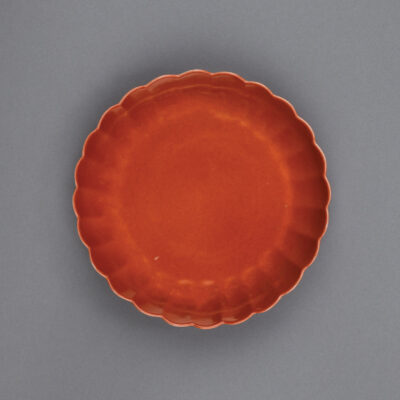
£POAChinese imperial porcelain coral-red ground chrysanthemum-form flower dish, ju ban pan, the body with fluted petals and slightly inverted foot, covered overall in a rich and even coral-red enamel.
-
12 – M5283
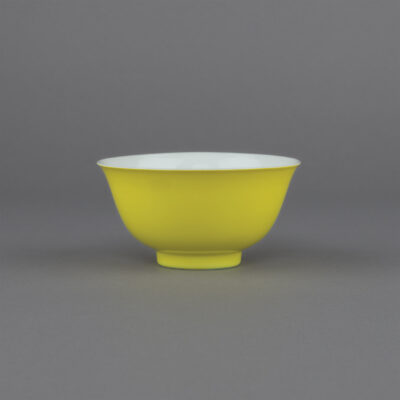
£POAChinese imperial porcelain lemon-yellow enamelled deep bowl, wan, thinly potted with gently flared rim and straight foot, covered overall in a rich and even lemon-yellow glaze, the interior glazed white.
-
13 – M5094
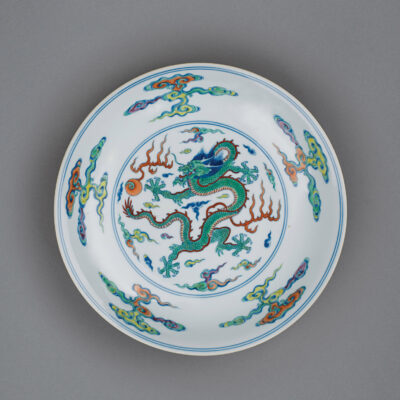
£POAChinese imperial porcelain doucai dragon saucer dish, pan, painted in the centre with a five-clawed dragon with open mouth and detailed scales in pursuit of a large iron-red flaming pearl, amongst stylised flames and ruyi-clouds all within two underglaze blue lines, the cavetto painted with five large ruyi-clouds in iron-red, aubergine, green and yellow enamels outlined in underglaze blue within two further underglaze blue lines beneath the rim. The underside with a wide band of crested foaming waves beneath clouds, all within underglaze blue double lines.
-
14 – M5280
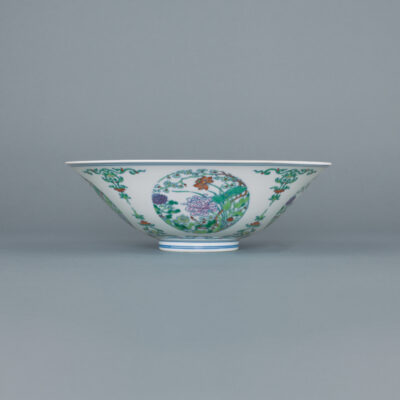
£POAChinese imperial porcelain doucai and famille rose enamelled conical floral medallion bowl, wan, painted on the exterior with four blossoming flower medallions of peony, lotus, chrysanthemum and prunus, representing the four seasons, the branches and leaves forming the roundel, all between stylised green-glazed branches with buds and lotus petals, beneath two underglaze blue lines at the rim repeated on the foot. The well of the interior with a double butterfly medallion and a prunus flower spray, circled by two pairs of underglaze blue double lines.
-
M4641
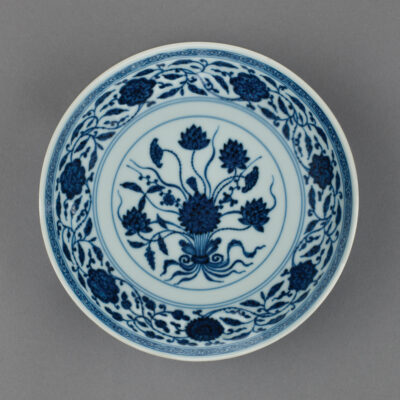
£38,500Chinese imperial porcelain blue and white “lotus bouquet” dish with gently rounded sides rising from a short tapering foot to a slightly everted rim, painted in rich cobalt-blue tones to the interior with a roundel enclosing a ribboned bouquet of lotus flowers, aquatic plants and a lotus pod, encircled by three concentric rings, the cavetto and exterior painted with seven alternating flowerheads amidst scrolling foliage, all below a classic scroll band.
-
M4703
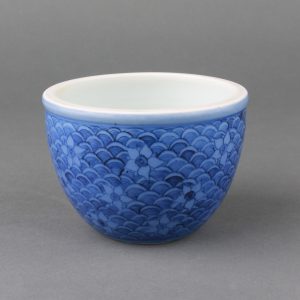
£POAChinese imperial porcelain celadon glazed deep bowl with flared rim, carved on the exterior with six camellia flowers on a continuous scrolling branch with leaves, covered overall and extending on the interior and base with a luminous celadon glaze.






Further information
Over the centuries, the royal court generated massive demand for Chinese Imperial porcelain, now highly collectable antiques. Imperial China had main palaces and residences and the royal princes had subsidiary regional courts. There were also many regional temples that required Imperial ware. In China, each household rank was entitled to a very specific collection set out in a written list. The last of which was produced in 1899 and specified that:
The Empress Dowager Cixi received 821 pieces of Imperial yellow Chinese porcelain, the Empress received 1,014 pieces, a concubine (first rank) received 121 pieces of Imperial yellow Chinese porcelain with a white interior and a concubine (second rank) received 121 pieces of Imperial yellow Chinese porcelain decorated with green dragons.
As more and more Imperial ware from China made its way into international collections, especially the cobalt blue designs from the Ming dynasty, Chinese Imperial porcelain developed a major influence over the world’s most famous design houses, most notably Delftware from the Netherlands.
The Kangxi Emperor (1661 – 1722) revived the Imperial Chinese porcelain factories in Jingdezhen after a 60-year period of dormancy. Under his reign, and of his successors Yongzheng and Qianlong, the Imperial Chinese porcelain factories flourished. Not only did they take inspiration from their predecessors, they combined it with amazing developments in production techniques to make exceptionally high quality Imperial ware. China, for example, led the way in the development of many of the techniques still in use today, including the development of opaque overglaze enamel colours that allow artists to create a much broader range of shades and hues.
You should also check

Bronzes & Works of Art
Bronzes and works of art.

Snuff Bottles

Famille Rose
Objects of the aforementioned colour palette primarily identified by the use of a pink enamel.
